turn feeling into a practice.
one year. three levels. learning that is online but never passive, with real field work, supervised practice, a capstone you run yourself, and a credential built to hold up. this is how you actually become an art therapist, ethically and for real.
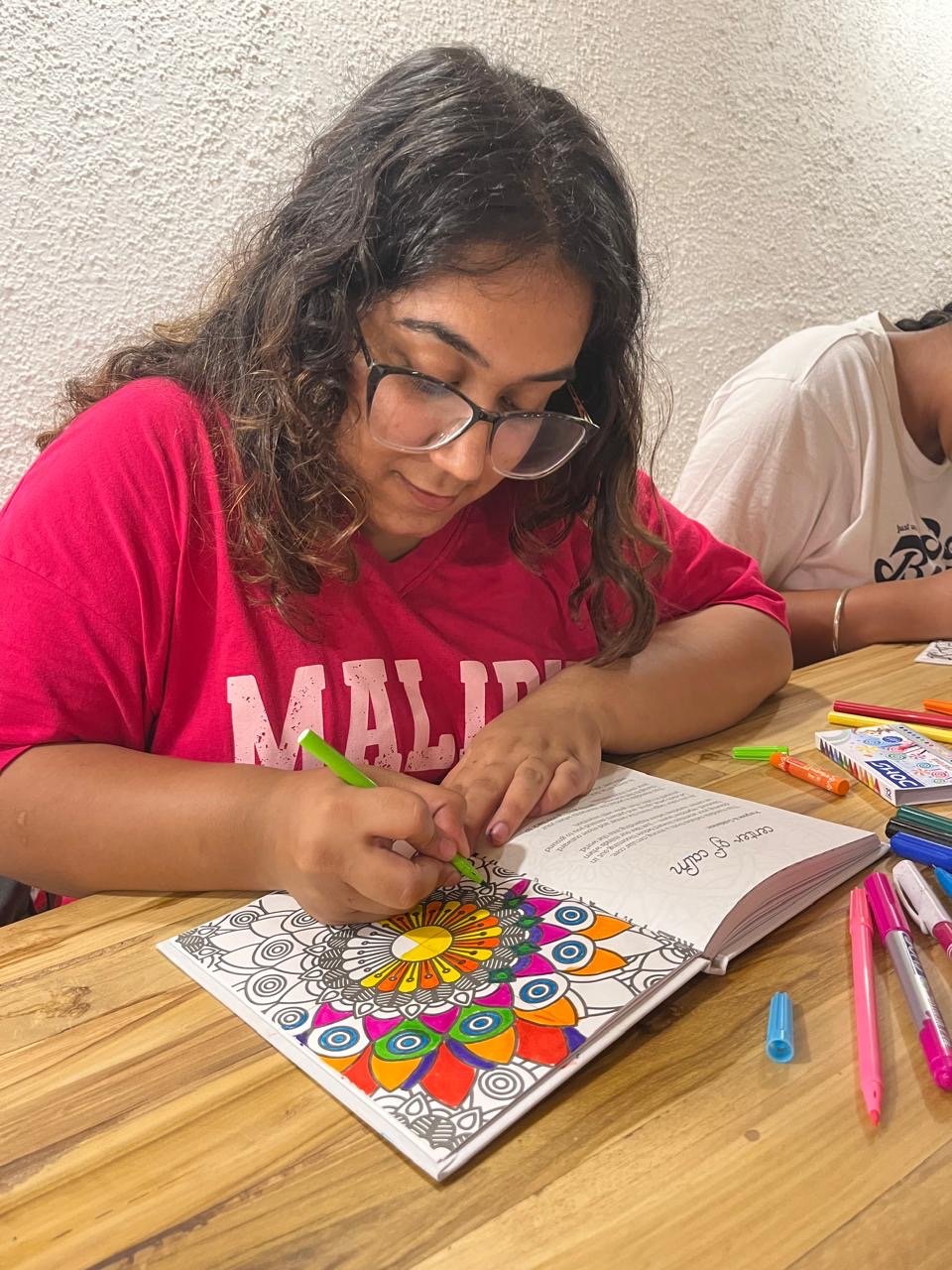
most art therapy "courses" are a video you forget.
a video library can teach you what art therapy is. it cannot teach you to hold a room, read a drawing, sit with someone mid-breakdown, and stay inside your ethical scope while you do it. that only comes from practice, feedback, and time. so we built a year, not a weekend.
india has a real and growing need for people who can bring expressive arts into schools, NGOs, clinics, and community spaces, and almost no path that trains them properly. this diploma is that path. you learn the theory, then you go and do the work under supervision, then you build something of your own and put your name on it.
it is mentorship-driven, field-tested, and honest about its limits. it will not hand you a clinical licence. it will hand you real skill, real practice, and a portfolio that proves both.
six things a recording can never give you.
mentors, not a video wall
you learn directly from practising art therapists, psychologists, a researcher, and a neuropsychologist, with live classes and real feedback.
actual field practice
two months of supervised, real-world work in community and care settings, not a roleplay in a slide deck.
supervision circles
one-on-one supervision and peer circles where your cases get seen, discussed, and sharpened by people who do this.
a capstone you run
you design and execute your own art therapy initiative, then document it. you graduate with something real, not just a grade.
a kit you keep
a physical and digital toolkit: journals, prompts, worksheets, audios, and a guidebook you will use long after you finish.
ethics as the spine
every level teaches you your scope. you leave knowing exactly what you can and cannot do, and how to refer when you should.
three levels, each one builds on the last.
tap a level to see what you do and what you can do by the end of it.
Level One · Core (Foundation + Advanced)
you start at the beginning, properly: what art therapy is and is not, and how creative expression maps to emotional processing. then the heart of the diploma, eight core modules that move from mindfulness-based and somatic work through gestalt and expressive techniques, symbolism and archetypes, the neuroscience underneath it all, family and couples, and how the work changes across the lifespan, with real case studies the whole way. the Foundation part doubles as our standalone Art Therapy Course if you want to test the water first.
- explain how and why art therapy works
- choose the right modality for a person
- read symbols without over-reading them
- adapt your approach by age and need
Level Two · Personalised Electives
your background decides your electives. a psychologist deepens integration with CBT, DBT, and case conceptualisation. an educator learns special-education and group methods. an artist studies abstract and community work plus the business of it. you build the version of this skill that fits your life.
- apply art therapy inside your own field
- design work for your specific people
- speak the language of your practice
Level Three · Practice + Capstone
you leave the screen for real, supervised practice in community and NGO settings, learning to design and hold group sessions, manage group dynamics, and facilitate a room, with one-on-one supervision and peer circles so every session you run gets seen and improved. then you finish by building something real: your own art therapy project, from a research-backed plan to delivery to a written reflection on impact, alongside a professional, case-study-backed portfolio and your certification.
- a group art session you can plan and run
- real-room dynamics handled calmly
- a project you designed and delivered
- a portfolio ready for real use, and your certification
the eight core modules.
mandatory for everyone, this is the spine of your training.
Mindfulness-based art therapy
breathwork, guided visualisation, and grounding through making.
Somatic art therapy
body-based expressive work for releasing what the body holds.
Gestalt & expressive art
the empty chair, the power of now, and structured emotion work.
Symbolism & archetypes
reading unconscious patterns in creative expression, carefully.
The neuroscience of it
plasticity, trauma-informed practice, and what the brain does with art.
Family & couples art therapy
attachment, relationship dynamics, and working with more than one person.
Across the lifespan
adapting your approach for children, teens, adults, and elders.
Case analysis & ethics
applying theory to real cases, inside clear ethical boundaries.
electives for the you that signed up.
pick the background that fits and see how level two bends the diploma toward your work.
Art therapy with CBT, DBT & gestalt
integrate cognitive and behavioural approaches with expressive work.
Therapeutic workbooks & guided assignments
build structured, prompt-led tools for your clients to work through.
Case conceptualisation & ethics
assess, document, and track progress responsibly and well.
Mind-body integration
weave movement, breathing, and visualisation into the art.
Guided imagery & meditative art
combine mindfulness practice with expressive making.
Art therapy in special education
adapt techniques for neurodivergent learners and learning needs.
Community & NGO interventions
design and run group sessions in schools and outreach settings.
Art in community & social spaces
design public projects and creative well-being initiatives.
Abstract & symbolic art therapy
use colour, texture, and metaphor as expressive tools.
The business of art therapy
set up workshops, programmes, and private sessions that last.
Art for self-healing
use creative practice for your own well-being and stress relief.
Art journals for self-discovery
a structured journaling method for emotional clarity.
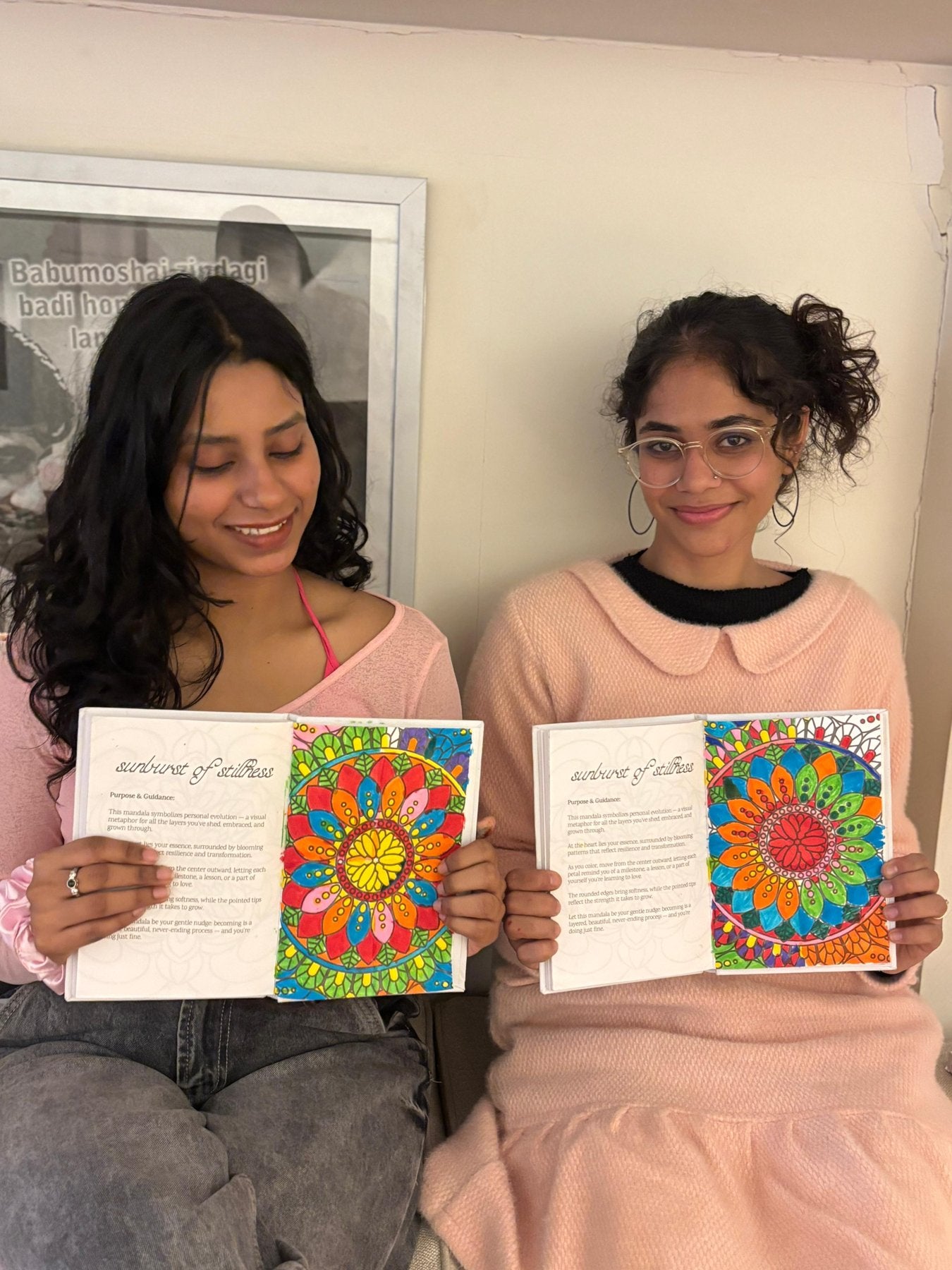
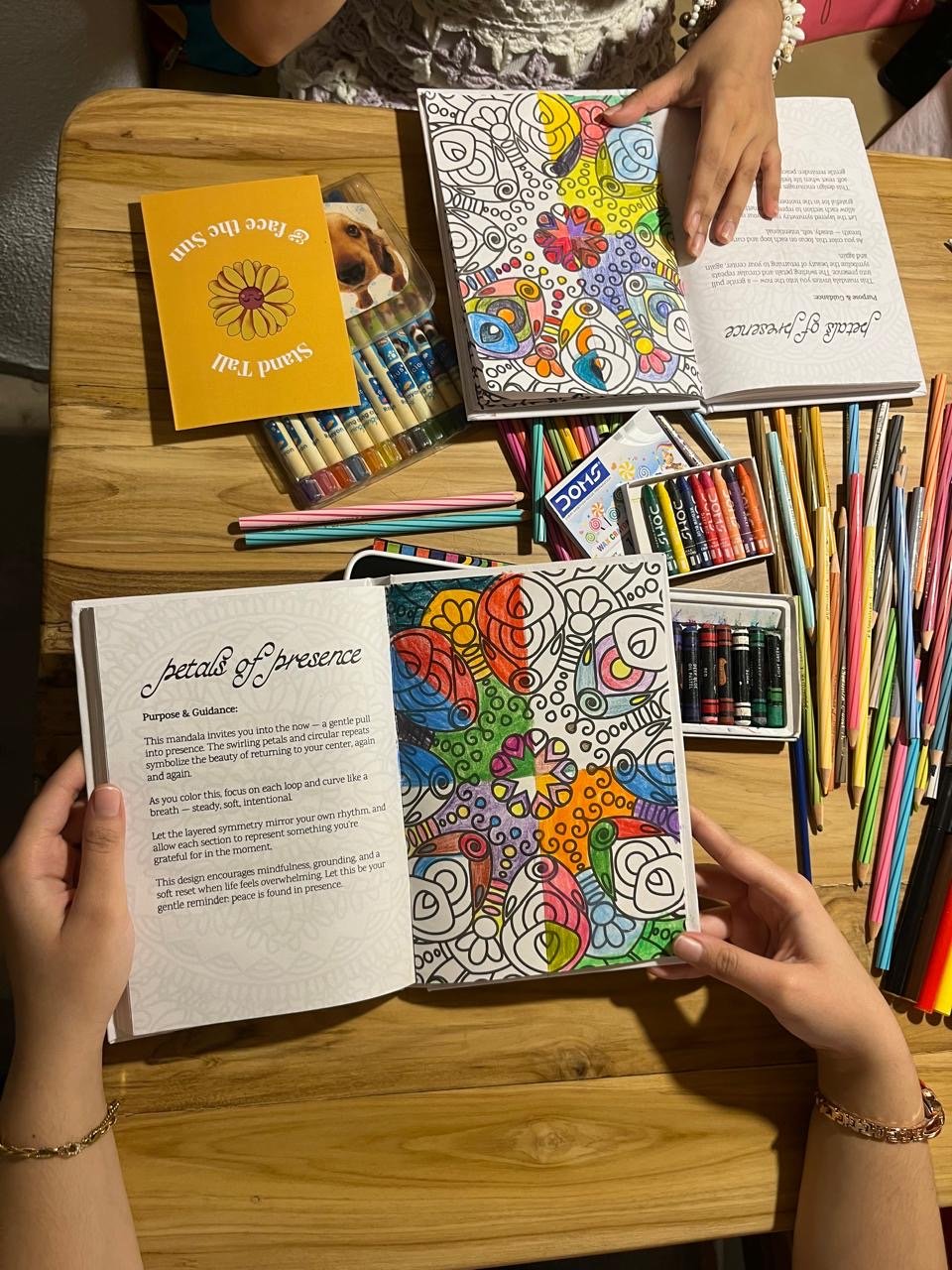
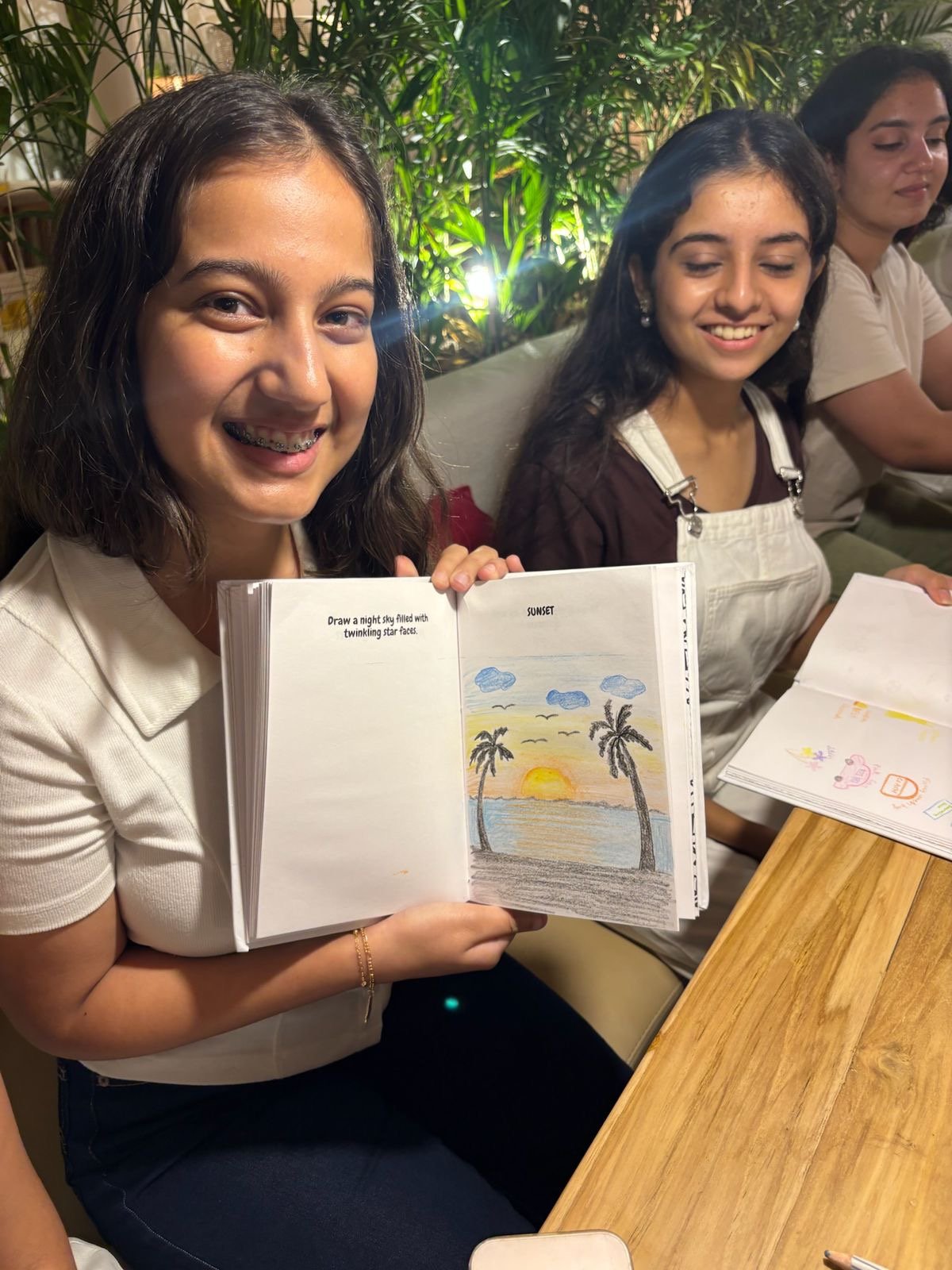
real rooms, real people, real work.
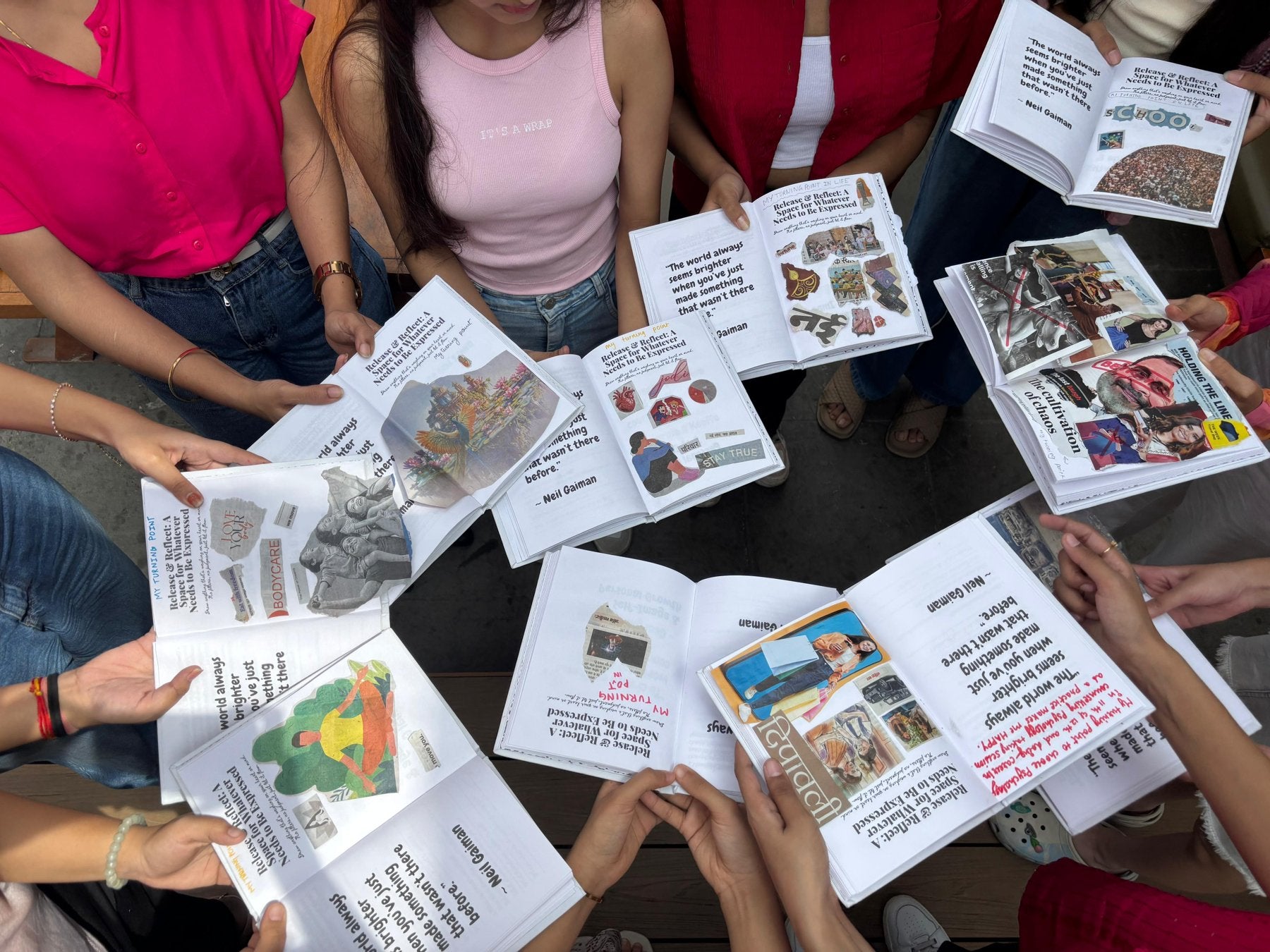
moments from our community and field sessions. this is the work you are training to do.
how you learn, and what you keep.
live, self-paced, and in the field
- live classes with faculty, where the real teaching happens
- self-paced modules and video demonstrations you revisit any time
- guided audios for art and mindfulness practice
- supervised field work and peer supervision circles
- one-on-one mentorship on your capstone and portfolio
tools you will still use years later
- a mandala notebook, doodle books, and an art therapy journal
- ready-to-use worksheets and templates
- 100+ art prompts for sessions and self-practice
- the Foundations of Art Therapy guidebook
- exclusive video demonstrations and self-paced modules
a credential built to hold up.
by what you can do, not what you memorised
- practical assignments across the core modules
- structured case-study analysis
- supervised practice, reviewed live
- a capstone project you design and deliver
- a final portfolio review with faculty
your certification package
- the Diploma in Art Therapy from Socially Souled
- a Certificate of Completion
- a Letter of Recommendation from Socially Souled
- a Competency Report mapping your real strengths
- validation of your internship and practical experience
This diploma builds real, applicable skill and credibility. It is not, on its own, a licence for independent clinical practice, and we will always tell you that plainly.
what you can actually do after.
run your own workshops
design and facilitate expressive-arts sessions and programmes for groups.
add it to your practice
integrate art therapy into existing counselling, coaching, or teaching, within your scope.
work in the field
bring the work into schools, NGOs, rehabilitation, and elder-care settings.
list on Souled Connect
once trained, list yourself as an art therapist on our marketplace and let people find you.
a mentorship-driven journey.
practising art therapists, counselling psychologists, a clinical researcher, and a neuropsychologist, alongside the founders.
you are not learning this alone.
You graduate into India's largest psychology community: cohorts, mentors, and practitioners who keep showing up long after the diploma ends.
what it costs, and how to start.
a full year of mentorship, field practice, a kit, and a credential. the full diploma is ₹30,000, and you do not pay it all now: hold your place, or talk to us first.
hold your place in the September intake. it adjusts against your full fee, and it is fully refundable if the diploma is not right for you.
- locks your place in the cohort
- a call with our team to map your fit
- adjusts against the full fee
the complete one-year programme: live classes, self-paced modules, electives, field practice with supervision, your capstone, the kit, and the full certification package.
- all three levels, 12 months
- physical and digital kit included
- supervised field practice
- certification package on completion
to enrol, reserve your seat above or book a discovery call below. instalments can be discussed on your call.
the honest answers.
do i need an art background or a psychology degree?
neither. the diploma is built for psychologists, counsellors, coaches, educators, artists, and serious enthusiasts alike. what you do need is a willingness to do the work and to respect your ethical scope, which we teach directly.
how much time will it take each week?
it is paced over twelve months with live classes, self-paced modules, and field practice. exact weekly hours are shared on your reservation call so you can plan around your life, but it is a real commitment, not a skim.
is it fully online?
the learning is online with live and self-paced parts. level three is real, supervised field practice, so you do step into actual rooms with supervision. that is the point.
will this make me a licensed clinical therapist?
no, and we will not pretend otherwise. it builds genuine, applicable skill and a strong credential, but it does not replace the formal qualifications required for independent clinical practice. you learn to work within your scope and to refer when you should.
what exactly do i graduate with?
the Diploma in Art Therapy, a Certificate of Completion, a Letter of Recommendation from Socially Souled, a Competency Report, validation of your practical experience, your physical and digital kit, and a portfolio you built yourself.
can i pay in instalments?
yes, instalment options can be arranged. reserve your seat first, then we work out the plan on your call.
what if i miss a live class?
sessions are supported by self-paced material and recordings where possible, so a missed live class does not derail you. your mentor keeps you on track.
a year from now, you could be the one holding the room.
hello@sociallysouled.com · +91 91370 08686